
Introduction: Why US China Trade Shifts Matter to the Stock Market
If you follow the stock market, the evolving trade relationship between the United States and China matters a great deal. New tariffs, export-control measures, and trade-deal headlines have the potential to send shockwaves through global supply chains, corporate profits, and investor sentiment. For anyone with exposure to equities — whether through individual stocks, ETFs, or mutual funds — what happens in Washington or Beijing may directly influence portfolio value.
In this article, I unpack the latest developments in US China trade, show how markets are reacting, and offer a forward-looking view on what investors should monitor next.

Recent Developments: What’s Changed in US China Trade
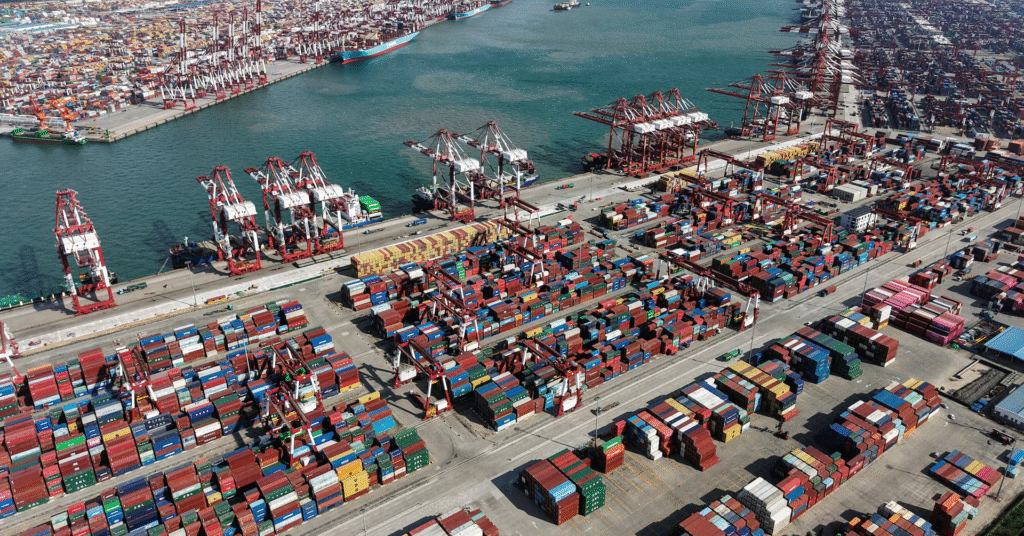
Here’s a breakdown of major events in recent months — and the potential market fallout.
| Timeframe | Event | What It Means for Markets |
|---|---|---|
| October 2025 | The U.S. announced steep new tariffs on Chinese imports. China responded by tightening export controls on rare earths and other critical materials. The Guardian+2Al Jazeera+2 | Increased risk of supply-chain disruption. Companies reliant on Chinese imports (especially in tech, manufacturing, and EV/semiconductor sectors) faced higher uncertainty and cost pressure. FinancialContent+1 |
| Late October 2025 | China expanded its export-controls on rare-earth metals essential for everything from batteries to tech hardware. Al Jazeera+1 | This move threatened global supply-chains and jolted sectors relying on those metals — spurring volatility for miners, manufacturers, and tech firms globally. Forbes+1 |
| November 2025 | A trade deal framework was reached: tariffs paused in some categories and China agreed to ease export restrictions under certain conditions. The White House+2The Guardian+2 | Relief for markets. Rare-earth miners saw share declines as earlier supply-disruption bets unwound. Investing.com+1 |
| Late 2025 (Asia market data) | Manufacturing indices across Asia — especially in China — reflected contraction, indicating weakening global demand partly due to trade uncertainty. Reuters+1 | Slumping global demand and manufacturing activity could weigh on global growth and corporate earnings, affecting markets broadly. |
Key Trends and What They Mean for Investors
Supply-Chain Disruptions and Sectoral Vulnerabilities
The recent trade tensions — especially export controls on rare-earth metals — underscore how deeply global supply chains depend on China. For sectors like technology, electric vehicles, semiconductors, and defense manufacturing, these materials are critical components. Al Jazeera+2Forbes+2
That means:
- Firms reliant on Chinese imports may face rising input costs or delivery delays. Investors should scrutinize their supply-chain exposure before investing.
- Commodity-linked firms and miners saw surges in valuation when supply risk was high but with recent de-escalation, some of those gains reversed as the trade deal unfolded. Investing.com+1
- Companies with diversified supply-chains or alternative sourcing (e.g. China-plus-One strategies) may gain relative advantage and be better positioned for long-term resilience. Research suggests many companies globally are re-allocating parts sourcing away from China under supply-chain reconfiguration trends. arXiv+1
Market Sentiment, Volatility and Risk Premiums
Markets have become more reactive. A headline about new tariffs or threatened export controls can trigger sharp sell-offs, especially in sectors with China exposure. FinancialContent+2FinancialContent+2
This environment has created:
- Higher volatility — equities swing on sentiment as much as fundamentals.
- Widening risk premiums — investors demand higher returns for companies exposed to geopolitical or supply-chain risk.
- Safe-haven appeal — firms with stable cash flows, or less exposure to global trade, look increasingly attractive.
Corporate Strategy Shifts and Global Supply-Chain Rebalancing
Amid instability, many companies are rethinking their global footprint. Some themes emerging:
- “China + 1” strategies — shifting parts of manufacturing or sourcing to other countries (e.g. Southeast Asia, India, Mexico) to reduce reliance on Chinese inputs. FinancialContent+1
- Greater diversification of supply-chains — sourcing from multiple geographies to mitigate risk.
- Rising costs for exporters/importers — which in some cases may erode profit margins or force price increases, with potential knock-on effects for consumer demand. FinancialContent+1
For investors, this makes supply-chain strategy and corporate sourcing disclosure more important than ever when evaluating companies.
My View: Portfolio Positioning in a Volatile Trade Landscape
As someone watching the markets, here’s how I’m thinking about positioning and risk — and what I’m closely monitoring:
Prioritizing diversification and defensiveness
- I’m leaning toward companies with global supply-chain diversification, or firms with minimal reliance on China for raw materials.
- I’m favoring sectors less exposed to global supply-chain disruption — domestic-oriented companies, or those in stable industries (consumer staples, essential services, etc.).
Selective commodity and supply-chain plays
- At times of high supply-risk, miners or rare-earth producers can be attractive — but with recent easing, many of those gains seem priced in. I may dip into selective positions but with caution.
Watching macro-signals, not headlines
- I avoid trading purely on headlines — instead, I monitor data: global demand (manufacturing PMIs), cost pressures, corporate supply-chain disclosures.
- I stay alert to policy shifts: any re-introduction of tariffs, new export-controls, or supply-chain regulations.
What Could Happen Next — Possible Scenarios & How They Might Affect the Market
| Scenario | Potential Market Impact | What Investors Should Do |
|---|---|---|
| Trade escalation — new tariffs or renewed export-controls | Markets may sell off, especially in supply-chain dependent sectors; volatility spikes | Hedge risk — consider defensive stocks, reduce exposure to vulnerable sectors |
| Partial agreement / truce — tariffs eased, export-controls relaxed | Risk perception lowers; supply-chains stabilize; growth expectations improve | Rotate into growth or cyclical stocks undervalued during sell-offs |
| Supply-chain reallocation continues (“China + 1” becomes global trend) | Firms adapting succeed; commodity/supply-chain diversification gains; global manufacturing shifts | Focus on diversified multinationals, geographically diversified supply-chain firms |
| Global slowdown from weakening demand (esp. due to trade-related uncertainty) | Broader market drag; weak earnings growth; defensive sectors outperform | Increase allocation to stable, cash-flow companies; avoid high-beta growth stocks |
Conclusion — Navigating Market Uncertainty with Disciplined Strategy
The evolving dynamics of US China trade relations in 2025 show how geopolitics, supply chains, and markets are deeply intertwined. Tariffs, export-controls, and corporate sourcing decisions are not abstract — they shape real-world costs, manufacturing flows, and ultimately, market valuations.
For stock-market investors, this means embracing flexibility, careful analysis, and diversification. Holding companies with diversified supply-chains, avoiding overexposure to trade-vulnerable sectors, and keeping a pulse on global demand dynamics can help weather the volatility and seize opportunities when they arise.
What about you? How are you positioning your investments in light of these trade developments — cautiously defensive, opportunistic, or somewhere in between? Drop a comment below; I’d love to hear your insights.